
TV Series Shot in Roatan Honduras
Roatan, a Caribbean island, has become a popular filming spot due to its stunning beaches, clear waters, and vibrant scenery. Its English-speaking community and established production support make it convenient for international crews. Here’s a quick look at three TV productions that have showcased Roatan:
- House Hunters International: Highlighted real estate options and the island’s lifestyle, boosting interest in tourism and property investments.
- Love Is Blind Season 8: Filmed in 2024 at the Kimpton Grand Roatan Resort, showcasing romantic settings and luxury experiences.
- Reality Shows (e.g., Survivor: Honduras): Used Roatan’s rugged landscapes and unique locations like Brick Bay and Marbella.
These productions have introduced Roatan to millions worldwide, driving tourism and economic growth while portraying its blend of Caribbean charm and modern amenities.
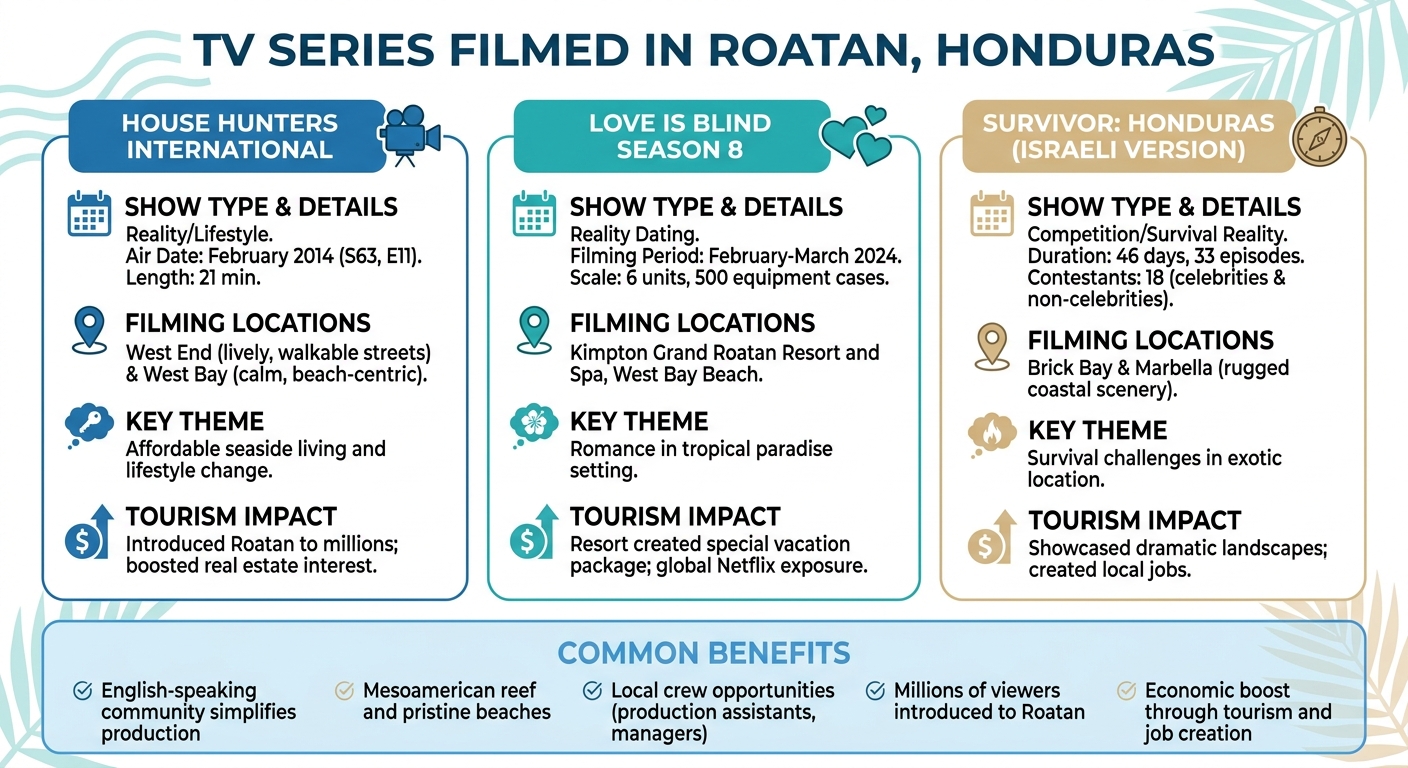
TV Series Filmed in Roatan: Comparison of Shows, Locations and Tourism Impact
EP 68 📺 Love is Blind Comes to Roatan! | Kimpton Grand Roatan Hosts Netflix’s Hit Reality Show
1. House Hunters International Episodes
House Hunters International put Roatan on the radar for many Americans by showcasing its varied real estate options and laid-back lifestyle. In February 2014, the show aired Season 63, Episode 11, titled "Family Time in Roatan." This 21-minute episode followed a family of three as they explored homes, balancing the convenience of West End’s bustling scene with the peaceful charm of West Bay.
Filming Locations
The episode highlighted two distinct parts of Roatan: West End, known for its lively, walkable streets filled with shops and restaurants, and West Bay, celebrated for its calm, beach-centric atmosphere. This contrast gave viewers a well-rounded glimpse into the different lifestyles the island offers.
Genre and Themes
As a reality/lifestyle program, the show appealed to viewers dreaming of a major life change. Episodes like this often focused on leaving behind urban stress for a simpler, tropical way of living. Roatan’s affordability for seaside homes also became a recurring theme. A similar show, Beachfront Bargain Hunt, featured a Phoenix family moving to Roatan in 2017, further emphasizing this point. These narratives not only showcased the appeal of island living but also planted the seeds for increased tourism interest.
Impact on Tourism
The international audience gained through television introduced Roatan to millions who might not have considered it before. By portraying the island as a reachable paradise, the series fueled interest in both vacation travel and real estate opportunities.
2. Love Is Blind Season 8
Netflix’s Love Is Blind brought even more attention to Roatan’s beauty during its Season 8 filming. Between February and March 2024, the reality dating series chose this Caribbean gem as the setting for its couples’ first in-person experiences after connecting in the pods. The Kimpton Grand Roatan Resort and Spa served as the backdrop, with production logistics involving six filming units and 500 equipment cases transported via U.S. airlines.
Filming Locations
The show was shot at the Kimpton Grand Roatan Resort and Spa, located on West Bay Beach, a spot known for its crystal-clear waters and its proximity to the Mesoamerican reef. Through stunning cinematography, the series highlighted Roatan’s picturesque beaches and its unique Caribbean charm, offering viewers a glimpse of the island’s natural beauty.
Genre and Themes
As a reality dating show, the Roatan segment explored whether emotional bonds formed in isolation could stand up to real-world challenges. The tropical setting provided the perfect stage for couples to confront compatibility issues as they navigated physical interaction and group dynamics. Local professionals, such as production assistants and managers, played a key role in ensuring smooth communication and operations, further solidifying Roatan’s reputation as a welcoming destination for filmmakers.
Impact on Tourism
The show’s influence extended beyond the screen. The resort leveraged its Netflix exposure by introducing a special "Love Is Blind" vacation package, available directly through its website. According to Roatan Film Services, the benefits went far beyond the immediate economic boost from hosting the production crew:
"The influx of production teams boosts the local economy through job creation and increased tourism. But we reap the benefits if we look past the immediate economic benefits when this piece of paradise is put on screen and viewed by millions of people who might not have heard of it before".
For many viewers, Love Is Blind was their first introduction to Roatan, opening the door to new tourism opportunities.
3. Reality TV Shows at Brick Bay and Marbella
Brick Bay and Marbella have become go-to spots for reality TV productions, showcasing Roatan’s varied and picturesque filming locations. Shows like House Hunters International and Love Is Blind have already put the island on the radar for audiences worldwide. A standout example is the Israeli version of Survivor: Honduras, which featured 18 contestants – split between celebrities and non-celebrities – competing over 46 days in 33 episodes, complete with a fresh "zombie" twist on the classic format.
Filming Locations
Roatan’s unique mix of settings draws in reality TV producers looking for something special. The island’s pristine beaches and rustic Caribbean vibe create a visually stunning contrast that works beautifully on screen. Add to that the breathtaking Mesoamerican reef and clear turquoise waters, and you’ve got a setting that’s hard to beat. Brick Bay and Marbella, in particular, offer coastal scenery that’s versatile enough to meet a variety of production needs. These locations combine a sense of exoticism with just enough familiarity to resonate with audiences.
Genre and Themes
What makes Roatan so appealing for reality TV is its ability to balance the exotic with the relatable. According to Roatan Film Services, the island blends Central American and Caribbean influences with subtle "US nods", which makes it an ideal choice for North American crews while still captivating global viewers. The fact that English is widely spoken on the island also simplifies logistics for international production teams. This mix of accessibility and striking visuals ensures that productions filmed here resonate with both local and international audiences.
Impact on Tourism
The benefits of hosting these shows go far beyond the filming itself. Local talent often finds work as production assistants or managers, creating job opportunities on the island. But the biggest payoff is the global exposure Roatan receives. As Roatan Film Services puts it:
"Filming a reality TV show in Roatán can have a lasting impact… this piece of paradise is put on screen and viewed by millions of people who might not have heard of it before".
This kind of visibility, similar to what shows like House Hunters International and Love Is Blind bring, introduces Roatan to potential tourists. Viewers get a glimpse of its stunning beaches, vibrant marine life, and rich cultural offerings, often turning their screen-time curiosity into real-life travel plans.
Pros and Cons
TV series filmed in Roatan offer a glimpse into the island’s charm, but they also come with their own set of upsides and challenges.
Real Estate Shows
Real estate programs often shine a spotlight on the dream of island living, but they can miss some important details. Shows like House Hunters International and Beachfront Bargain Hunt have painted Roatan as an affordable tropical escape. For instance, one episode highlighted a family’s move to the island, emphasizing the appeal of seaside living at a reasonable cost. However, with only 20 minutes per episode, these shows tend to focus on buying property rather than diving into the island’s rich cultural background. They also tend to gloss over the legal and financial complexities involved in moving internationally.
While real estate shows emphasize affordability, romance and dating programs take a different approach, focusing on luxury and allure.
Romance and Dating Shows
Romance-themed shows use high-end production to capture the island’s romantic ambiance. For example, Love Is Blind (Season 8) used state-of-the-art equipment to showcase Roatan’s stunning natural scenery. These shows often highlight luxurious resorts and breathtaking ocean views, presenting the island as a dreamy getaway. But by centering on resort life, they can overlook the authentic local culture and everyday life, reducing Roatan to little more than a beautiful backdrop.
Competition and Survival Shows
Survival and competition programs spotlight the island’s rugged and untamed beauty, but they can also paint it in a harsher light. The Israeli version of Survivor: Honduras, which featured 18 contestants over 46 days, showcased Roatan’s dramatic landscapes. While these visuals are striking, they might give some viewers the impression that the island is a harsh or dangerous destination, potentially discouraging casual tourists. Additionally, to appeal to international audiences, production teams often add familiar U.S. elements, which can create a skewed image of the island as more "Americanized" than it actually is.
Behind the scenes, the logistics of production also play a big role in shaping how Roatan is portrayed.
Production Logistics and Impact
Producing these shows requires significant logistical effort, such as transporting 500 cases of equipment via U.S. airlines, which demonstrates a commitment to high-quality filming but also poses risks to the local economy. As Bronson Film notes:
"It’s essential to ensure that filming doesn’t disrupt daily economic life on the island, which is heavily dependant on tourism".
While these productions can bring temporary jobs and economic boosts to the island, they also risk prioritizing short-term gains over long-term stability. Ultimately, Roatan’s appeal as a filming location lies in its ability to balance its stunning visuals with the practical challenges of production.
Conclusion
TV series have helped transform Roatan from a well-kept secret into a destination with global appeal. According to the Roatan Tourism Bureau, the island is gaining momentum, with its stunning beaches, real estate opportunities, and forward-thinking developments showcased in shows like Meet The Drapers.
Visitors can immerse themselves in the island’s charm by exploring key filming locations. From snorkeling and diving along the breathtaking Mesoamerican reef to visiting cutting-edge projects like Próspera ZEDE and Infinita City, there’s something for everyone. Even the real estate market offers a chance to tour affordable seaside homes, adding to the island’s allure.
With an English-speaking community and strong infrastructure – capable of handling logistical feats like managing 500 equipment cases – Roatan ensures a smooth experience for travelers. Whether you’re seeking romance, adventure, or a slice of island life, Roatan promises the same magic that captivates audiences on screen.
FAQs
Can I visit the exact filming locations in Roatan?
Yes, many filming locations in Roatan, Honduras, are open for visitors to explore. Popular spots like the stunning beaches, notable landmarks, and scenic natural areas showcased in productions such as Survivor: Honduras and A Place in the Caribbean are often accessible. However, keep in mind that some locations might be on private property or within protected zones. It’s a good idea to consult local tour operators for access information and to ensure you’re visiting responsibly.
When is the best time of year to see Roatan like it looks on TV?
The ideal time to visit Roatan and see it as it’s often showcased on TV is during the dry season, which runs from December to April. During these months, the weather is sunny, and the island’s beaches and scenery are at their most stunning and colorful.
Did these TV shows change tourism and local life on Roatan?
The filming of TV shows in Roatan has had a noticeable impact on both tourism and local life. By featuring the island’s stunning landscapes and cultural landmarks, productions like Survivor: Honduras and various reality shows have introduced its pristine beaches and vibrant marine life to audiences worldwide. This exposure has drawn more visitors to the island, providing a boost to tourism and local businesses. However, balancing this growth with sustainable practices remains crucial to protect the community and the environment for the future.