
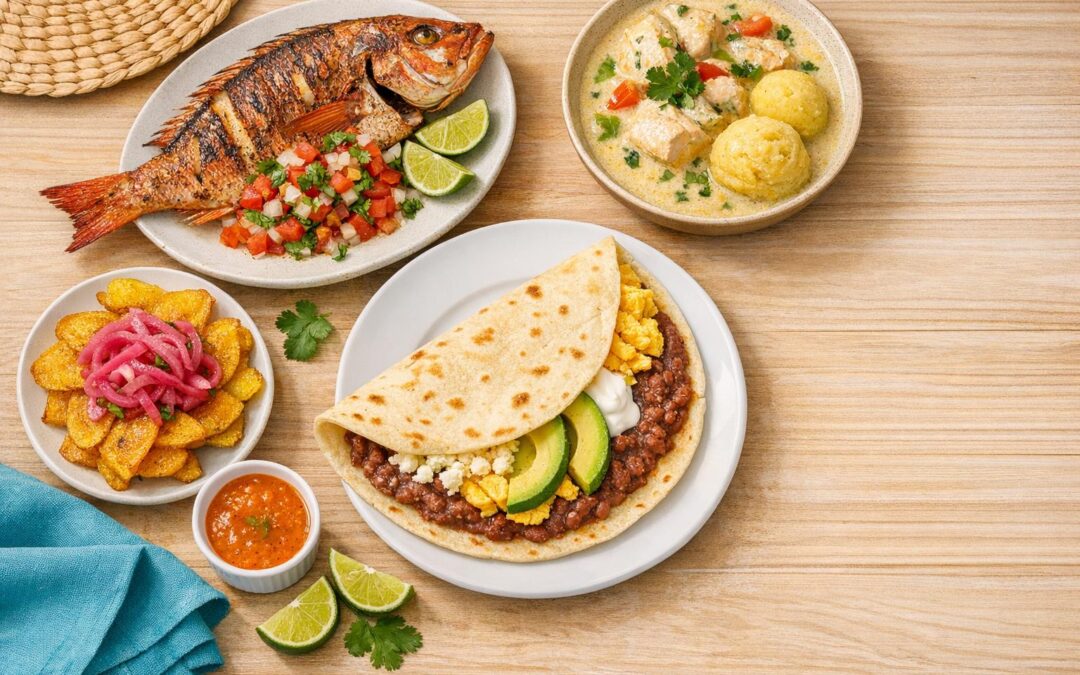
Roatan, known for its beaches and diving spots, also offers an incredible food scene influenced by Garifuna, Caribbean Creole, and Honduran traditions. From street snacks to hearty meals, here’s a quick look at must-try dishes:
- Baleadas: Soft flour tortillas filled with beans, cheese, and cream, starting at $2.
- Seafood Platters: Fresh lobster, shrimp, and fish paired with coconut rice, priced around $10–$20.
- Whole Fried Fish: Served with coconut rice, beans, and plantains for $10–$15.
- Machuca: Plantain-based dumplings in coconut seafood soup, tied to Garifuna heritage.
- Conch Soup: A coconut milk-based dish featuring tender conch, $10–$15.
- Rotisserie Chicken: A classic Honduran spread with rice, beans, and plantains, $10–$15.
- Chicharrón con Yuca: Fried pork with cassava, a quick snack for under $2.
- Coconut Bread: A dense, savory bread, perfect for pairing with soups, under $2.
- Street Snacks: From tacos to tropical juices, affordable bites for $2–$5.
- Local Drinks: Beers like Salva Vida, guífiti (herbal rum), and limeade, $2–$9.
Whether you’re dining in Punta Gorda or grabbing street food in West End, each meal reflects the island’s history and flavors.
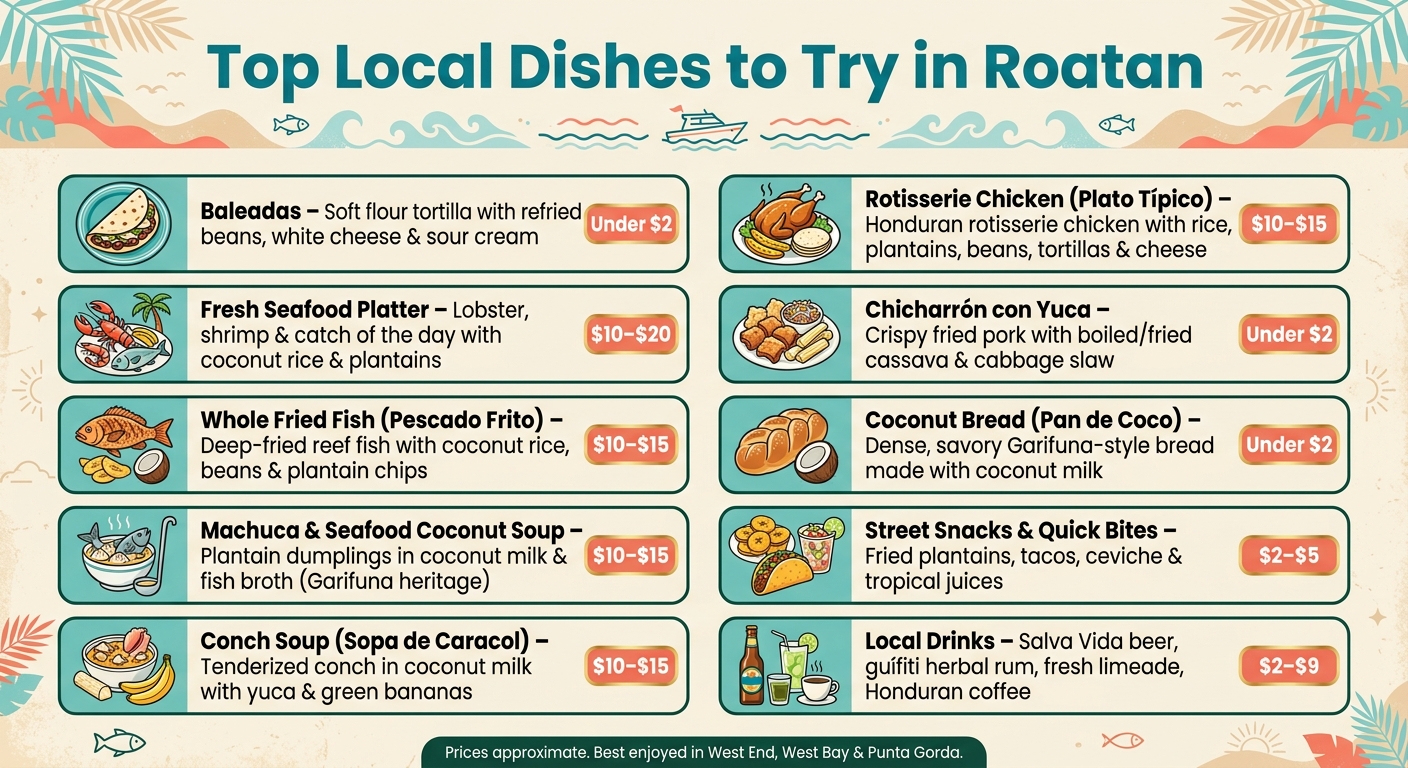
Top Local Dishes to Try in Roatan: A Food & Price Guide
Eating Street Food in Roatán on a Shoestring Budget
sbb-itb-861e7fb
1. Baleadas
Baleadas are a true reflection of Roatan’s cultural mix and an essential dish for anyone visiting the island. This beloved Honduran staple consists of a soft flour tortilla folded over a filling of refried beans, crumbled white cheese, and mantequilla (a Honduran-style sour cream). Simple yet satisfying, it’s a go-to comfort food.
The story behind baleadas adds a touch of charm. According to local lore, they were first made in 1964 by Doña Teresa in La Ceiba. She created them to support her five children. The name "baleada", which translates to "shot" or "wounded by bullets", supposedly originated from a customer’s playful comment: "The beans are bullets, the cheese is gunpowder, and the tortilla is the gun".
You’ll find baleadas everywhere, from roadside stalls to small comedores (eateries) across Roatan. Popular areas like the West End and West Bay are known for their delicious offerings, with spots like Rudy’s in the West End attracting locals and visitors alike, especially early in the morning. Best of all, they’re incredibly affordable – typically under $2 for a basic baleada.
For a heartier option, you can add toppings like scrambled eggs, avocado, chorizo, or grilled steak for just a bit more. Their quick preparation and portability make them the ideal snack to grab between snorkeling adventures or exploring the island. Baleadas are more than just street food – they’re a gateway to Roatan’s rich culinary traditions.
2. Fresh Seafood Platter
Seafood is at the heart of Roatan’s cuisine, with local fishermen supplying restaurants daily to ensure top-tier freshness.
A typical seafood platter features a mix of lobster tails, shrimp, and the catch of the day – often snapper or wahoo. These are served with coconut rice, beans, and plantains. Chefs either grill the seafood with garlic butter and Caribbean spices or deep-fry it using traditional methods. For an eco-friendly choice, ordering lionfish helps support reef conservation efforts. These dishes truly highlight the vibrant flavors of the region.
Gio’s Restaurant in French Harbour is a standout spot for seafood, particularly their famous king crab platter.
"Gio’s Restaurant in French Harbour is synonymous with fresh seafood – especially their legendary king crab platters." – Roatan Tourism Bureau
In the West End, Gingers Caribbean Grill (boasting a 4.7/5 rating from 329 reviews) serves a classic seafood platter, featuring lobster and shrimp combinations. Meanwhile, Beachers Bar & Grill in West Bay offers an unbeatable deal: three freshly grilled lobster tails with salad and potatoes for just $20.
Pro tip: Lobster season in Roatan runs from June through February. If your trip aligns with this period, be sure to indulge in this local delicacy.
3. Whole Fried Fish With Coconut Rice And Beans
When it comes to dishes that embody the spirit of Roatan, Pescado Frito takes center stage. This is a whole deep-fried reef fish served alongside coconut rice, beans, and crispy plantain chips. What sets this dish apart is the coconut rice, which is cooked in coconut milk until every grain is infused with a rich, tropical essence, making it distinct from versions found on the mainland.
"No meal on Roatán is complete without coconut rice and beans – the grains simmered in coconut milk until each grain is plump and fragrant." – Caribbean Adventures Roatan
Snapper and grouper, often freshly caught straight from the reef, are the go-to choices for this local favorite. For a true taste of island life, head to Punta Gorda or visit popular West End eateries like The Blue Marlin or Cal’s Cantina, where you can enjoy this hearty meal for around $10 to $15. It’s a dish that perfectly captures the essence of Roatan’s culinary traditions.
Many tours even include a stop at a traditional restaurant, giving you the chance to savor this iconic meal. For the ultimate experience, pair it with pan de coco (a soft, slightly sweet coconut bread) to soak up every last bit of flavor.
4. Machuca And Seafood Coconut Soup
Roatán’s rich seafood and street food traditions come alive in Machuca, a dish deeply tied to the island’s Garifuna heritage.
Machuca is a reflection of cultural roots, blending boiled green and ripe plantains that are hand-pounded into a soft dough using a wooden mortar. This process, reminiscent of West African fufu, was introduced by the Garifuna people when they arrived in 1797. The preparation is more than just cooking – it’s a tradition passed down through generations, especially among Garifuna women.
The dish itself features Machuca dumplings served in a coconut milk and fish broth infused with garlic, ginger, and Scotch bonnet peppers. Often, it’s paired with other local soups like Sopa de Caracol or Tapado. To enjoy it the traditional way, tear off a piece of Machuca and dip it into the flavorful broth.
"Machuca is one of the most direct connections to the Garifuna ancestors who arrived on Roatán’s shores in 1797." – Caribbean Adventures Roatan
For an authentic taste, Punta Gorda on Roatán’s northern coast is the place to go. This area, the heart of Garifuna culture, is home to family-run restaurants perched on wooden piers over the Caribbean Sea. These spots serve Machuca alongside seafood soups, typically priced between $10 and $15. Many East End tours include a stop in Punta Gorda, where visitors can also experience traditional drumming, dancing, and cooking demonstrations. Enjoying Machuca here – especially at sunset – is a moment to savor, with the breathtaking sea views adding to the experience.
"Eating Machuca with a view of the Caribbean Sea at sunset is not a staged attraction – it is the everyday reality of the place." – Roatan.eu
Next, delve into Roatán’s culinary scene with its signature conch soup.
5. Conch Soup
Sopa de Caracol – or conch soup – is often regarded as the heart of Bay Islands cuisine, with deep roots in Garifuna culinary traditions.
"Sopa de Caracol: Conch Soup – the soul of the Bay Islands. The undisputed icon of Bay Islands cuisine." – Caribbean Adventures Roatan
This flavorful dish features tenderized conch meat as its star ingredient, slowly simmered in a rich blend of coconut milk and fish stock. It’s enhanced with yuca, green bananas, garlic, ginger, and thyme, creating a complex and comforting flavor profile. A Scotch bonnet pepper is added whole to the pot, lending a subtle warmth without overwhelming heat. Traditionally, it’s served alongside ereba, a crisp cassava flatbread native to the Garifuna.
For a true taste of tradition, head to Punta Gorda, where family-run spots have perfected this dish over generations. If you’re after a seaside dining experience, The Blue Marlin is another great choice. A bowl of this satisfying soup typically costs between $10 and $15.
Conch soup is also a natural fit for an East End adventure. Many local food tours highlight this dish, and eco-tours of the Mesoamerican Barrier Reef often include opportunities to spot queen conch in their natural habitat. This iconic soup is more than just a meal – it’s an invitation to dive deeper into Roatán’s rich culinary scene.
6. Honduran Rotisserie Chicken With Sides
If you’re looking for a satisfying meal during your island adventure, Honduran rotisserie chicken from the classic Plato Típico is a must-try.
The Plato Típico is a staple of Honduran dining, offering a generous spread of five sides: rice, fried plantains, refried beans, tortillas, and fresh cheese. Together, these create a flavorful combination of savory, sweet, and smoky tastes that reflect the heart of Honduran cooking.
You’ll typically pay between $10 and $15 for this filling dish, making it an affordable way to stay fueled for your day’s activities.
Rotisserie chicken is easy to find around busy areas like Coxen Hole and French Harbour. For a more relaxed dining experience, check out popular spots like Gio’s Restaurant or Cal’s Cantina.
Pro tip: Ask for the house-made salsa or pickled vegetables on the side. The tangy, zesty flavors add a refreshing balance to the richness of the chicken and sides. This meal is a perfect blend of casual street food and sit-down dining, showcasing the diverse flavors of Roatán.
7. Chicharrón Con Yuca
Chicharrón con yuca is a hearty snack that’s perfect when you’re on the move. This dish brings together crispy, deep-fried pork rinds or pork belly with boiled or fried yuca (cassava), creating a satisfying mix of flavors and textures. The salty crunch of the pork pairs beautifully with the dense, buttery softness of the yuca.
For a little extra zing, it’s often topped with a tangy cabbage slaw that balances out the richness of the pork. It’s the kind of snack that’s as easy to eat as it is to love.
If you’re looking to try this dish, head to the roadside stalls or food trucks in West End – they’re known for serving some of the best versions. For a deeper connection to its roots, visit Punta Gorda, a Garifuna village where yuca plays a central role in traditional dishes. Best of all, it’s incredibly affordable, with most portions costing under $2 at street stalls.
This snack is a low-commitment way to dive into local flavors without the need for a sit-down meal. If you’re out exploring the island, keep an eye out for it at markets or roadside stands – it’s a must-try. Up next, discover the island’s signature baked goods and their unique place in Roatán’s culinary scene.
8. Coconut Bread And Island Baked Goods
At dawn, the island comes alive with the irresistible aroma of pan de coco.
"Before sunrise on Roatán, the smell of pan de coco drifts through settlements across the island." – Caribbean Adventures Roatan
Pan de coco, or coconut bread, is a morning staple, freshly baked in outdoor kitchens and roadside stalls. Despite its name, it’s not sweet. Made with just coconut milk and oil – no eggs or dairy – this dense, savory bread is perfect for tearing apart and dunking into a bowl of fish stew or Sopa de Mariscos.
The recipe for pan de coco is steeped in Garifuna heritage, brought to the island through Antillean migration. These traditional methods are passed down through generations, taught by demonstration rather than written instructions. To experience this tradition firsthand, visit Punta Gorda, a Garifuna village on Roatán’s north shore, where the bread is still made using time-honored techniques. Alternatively, you can grab a fresh loaf at Sandy Buns.
For less than $2, you can enjoy this delicious street food – just make sure to get it fresh and warm in the morning. Many cultural tours on the island stop at Garifuna communities or local markets, making it easy for visitors to sample pan de coco. Another local favorite you might encounter is casabe, a thin, crispy cassava bread often paired with stews and dips.
Ready to dive deeper? Roatán’s street snacks and quick bites offer even more flavors to discover.
9. Street Snacks And Quick Bites
Roatán’s street food is a fantastic way to enjoy local flavors without breaking the bank. Whether you’re pausing between dive sessions or just wandering the island, you’ll notice food trucks and roadside stalls scattered everywhere – especially in West End and West Bay. These quick bites are perfect for sampling the island’s culinary flair.
One of the most-loved snacks is the baleada, which we’ve already touched on earlier. It’s a staple at street stalls island-wide. For a local favorite, check out Rudy’s in West End, where you’ll often find a line of locals grabbing their morning baleadas. Another must-try is fried plantains – crispy, salty, and available from vendors all over Roatán.
Thirsty? Many stalls serve refreshing tropical juices made from mango, pineapple, or passionfruit, typically priced at $3–$5. If you’re in the mood for something light and flavorful, stop by Calelu’s for ceviche and smoothies. For late-night cravings, Tacos Raul is the go-to spot for sidewalk tacos.
If you’re hungrier, look for BBQ meat plates or daily lunch specials offered at many roadside spots. These hearty meals usually cost around $5–$6.
A quick tip: When using US dollars, ensure your bills are clean and intact. Vendors often won’t accept torn or marked bills.
10. Local Drinks To Pair With Your Meal
Roatan’s drinks are more than just beverages – they’re an essential part of the island’s culinary experience. Whether you’re savoring a casual meal or indulging in a traditional dish, pairing it with the right local drink adds an extra layer of flavor and connection to the island’s culture. From local beers to refreshing non-alcoholic options, there’s something for every palate.
Local beers are a go-to choice for casual dining. Popular options like Imperial, Salva Vida, and Barena can be found at West End bars or pulperías (corner stores). These beers are budget-friendly, costing about $3 pre-tax (roughly $4 after tax). For something a bit more adventurous, head to Roatan Island Brewing Co. for drafts like Pina Heffe or Juicy IPA, priced between $5–$7 (around $6.50–$9 with tax). These pair wonderfully with hearty meals like rotisserie chicken or fresh seafood platters.
For a drink steeped in tradition, try guífiti, a Garifuna herbal-infused rum. This potent beverage is best enjoyed in Punta Gorda at Wagundan Restaurant, where it’s often served alongside dishes like machuca.
"The local drink of choice is guífiti, a potent herbal-infused rum with a long-standing cultural significance." – Roatan Tourism Bureau
If you’re steering clear of alcohol, Roatan’s non-alcoholic options are equally enticing. Fresh limeade and house-made ginger beer are standout choices, typically priced at $3–$4. These refreshing drinks are perfect for balancing the richness of dishes like coconut-based soups or fried fish. And don’t miss out on Honduran coffee, available at spots like Sandy Buns or Café de Palo for about $2–$3. It’s the ideal companion to sweet coconut bread or a hearty Desayuno Típico.
One practical tip: many smaller vendors operate on a cash-only basis, so it’s wise to carry small bills. Here’s a quick guide to some of Roatan’s must-try drinks and their perfect pairings:
| Drink | Where to Get It | Price (All-in) | Best Paired With |
|---|---|---|---|
| Imperial / Salva Vida / Barena | West End bars, pulperías | ~$4 | Fried fish, baleadas, BBQ |
| Roatan Island Brewing Co. draft | Roatan Island Brewing Co. | ~$6.50–$9 | Rotisserie chicken, seafood |
| Guífiti | Wagundan Restaurant, Punta Gorda | Varies | Machuca, conch soup |
| Fresh limeade / ginger beer | Calelu’s, local stalls | $3–$4 | Coconut soups, ceviche |
| Honduran coffee | Sandy Buns, Café de Palo | $2–$3 | Coconut bread, Desayuno Típico |
These drinks not only enhance your meal but also provide a glimpse into Roatan’s rich culinary traditions.
Conclusion
Roatán’s food scene is a flavorful reflection of its history, traditions, and deep connection to the Caribbean. From grabbing a roadside baleada to savoring a lionfish dish by the water, every bite tells a story. It’s a story of the Garifuna people, the blending of African and Spanish influences, and the island’s natural bounty.
Choosing local dishes is more than just a culinary decision – it’s a way to immerse yourself in the island’s culture. Stopping by Punta Gorda lets you experience Garifuna heritage firsthand with dishes like machuca and seafood coconut soup. Opting for lionfish on the menu not only offers a distinct flavor but also contributes to protecting the island’s reefs. These meals are more than food – they’re a way to connect with Roatán and support its community.
Mix up your dining experiences: start your day with pan de coco or a hearty Desayuno Típico, grab some street food for lunch, and wrap up with a seafood dinner by the sea. Pair your meals with a Monkey Lala cocktail, fresh tropical juice, or a rich cup of Honduran coffee, and you’ll gain a deeper appreciation for the island’s vibrant food culture.
"Sampling authentic dishes is one of the best ways to experience the island like a local." – Michelle, Honduran Author
While Roatán’s beaches and reefs are unforgettable, its cuisine is what will linger in your memory. Let these flavors become an essential part of your island adventure.
FAQs
Where can I find the most authentic Garifuna food in Roatan?
You can find authentic Garifuna food in Roatan by visiting local eateries and markets. These dishes showcase the island’s rich heritage, combining African, Spanish, and Creole flavors. For a taste of tradition, seek out places that focus on Garifuna cuisine for an unforgettable experience.
What local dishes are best for travelers on a tight budget?
For travelers keeping an eye on their budget, baleadas are an absolute must. These hearty tortillas, usually packed with beans, cheese, and a variety of toppings, offer a satisfying meal at a low cost. Easily found at roadside stands, food trucks, and small local eateries all over Roatan, they’re a convenient way to savor authentic flavors without breaking the bank.
What’s the safest way to order fresh seafood in Roatan?
The best way to enjoy fresh seafood in Roatan safely is by dining at restaurants that adhere to the Bay Islands Responsible Seafood Guide. This guide highlights responsibly sourced choices, including tuna, lionfish, wahoo, and mahi mahi. By choosing these establishments, you not only savor delicious meals but also support sustainable practices that protect marine life.